strava
Country - bosnia & herzegovina
partner - obojena klapa
project manager - adna muslija
STRAVA is an experimental film exploring fear, trauma, and ritual through a postcolonial lens of female Balkan identity. Set within the landscape of a Bosnian mountain, the film draws on the imagery and symbolism of salijevanje strave — a traditional ritual of releasing fear and healing psychological distress through the pouring of molten lead, accompanied by quiet prayers and incantations.
This performative reinterpretation of the ritual is juxtaposed with a narrative that critically engages with the orientalist and colonial gaze embedded in historical travel writings about Bosnia and the wider region.
The soundscape, composed by Nenad Kovačević, weaves together traditional Bosnian and Balkan instruments with field recordings and synthetic textures, positioning sound as a central protagonist within the film's exploration of identity and trauma. At the core of the visual narrative is a female figure wearing a fez — traditionally a male garment — covered in donated lace from Bosnia and North Macedonia.
Through the interplay of landscape, body, and sound, the film contrasts the stillness of nature with the inner turbulence of identity, history, and inherited trauma. Strava, an archaic word for fear, transforms into a marker of identity itself.
ArtistS
Director/visual artist - maja zećo
composer/sound artist - nenad kovačević
STRAVA: towards a first residency in Bijambare cave
STRAVA is an experimental musical film by visual artist Maja Zećo and composer Nenad Kovačević, produced by Obojena Klapa in Bosnia and Herzegovina. It explores fear, trauma and ritual through a decolonial lens, centred on salijevanje strave, an old Bosnian healing ritual in which molten lead is poured into cold water to relieve fears and nightmares.
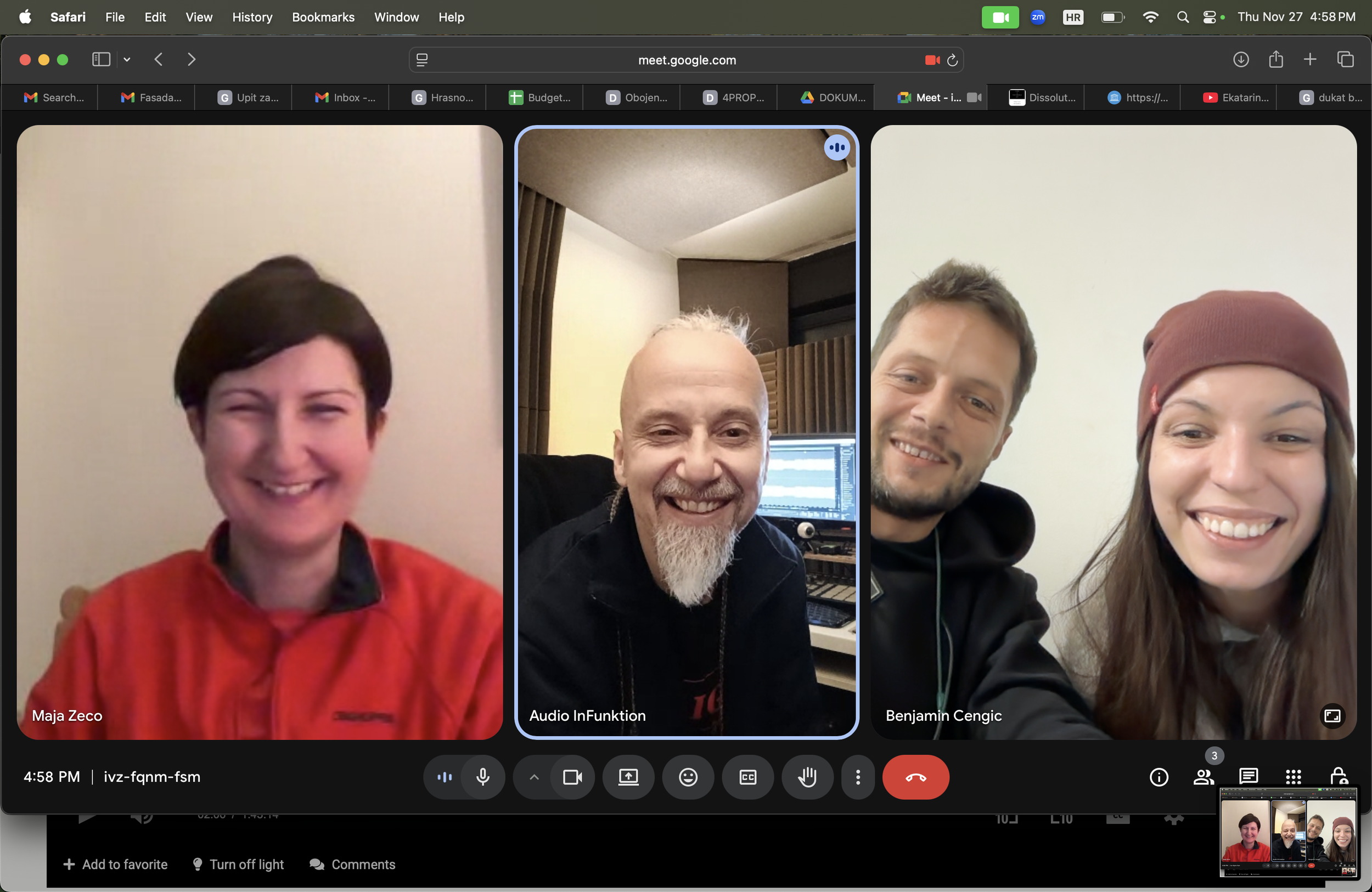
The team’s work began in Sarajevo in May 2025, when Obojena Klapa met Nenad Kovačević to agree how the collaboration would work and how image and sound would relate in the film. Further team meetings in Sarajevo in June 2025 and February 2026 shaped the film’s concept and visual approach. Between them, online meetings kept the work moving, including a session in November 2025 where Maja and Nenad aligned the film’s visual and sound development.
Research ran alongside. Maja Zećo’s work on the writer Rebecca West, who travelled through the Balkans in the 1930s, led the team to question Western, orientalist readings of Bosnian customs, and to look instead to rituals that predate the East–West divide. Through 2026 the team scouted locations in the Bosnian mountains, refined the script, and developed costumes and a sound world built from field recording, hydrophones and contact microphones, blending traditional Balkan instruments with electronics.
On 17 October 2026 the team met to plan the filming. From 15 to 17 November 2026 they will hold their first residency in Bijambare cave, near Sarajevo. There they will re-stage the ritual in a surrealist setting of lace and red fabric, with a female figure in a lace-covered fez, and record the sound of the cave itself.